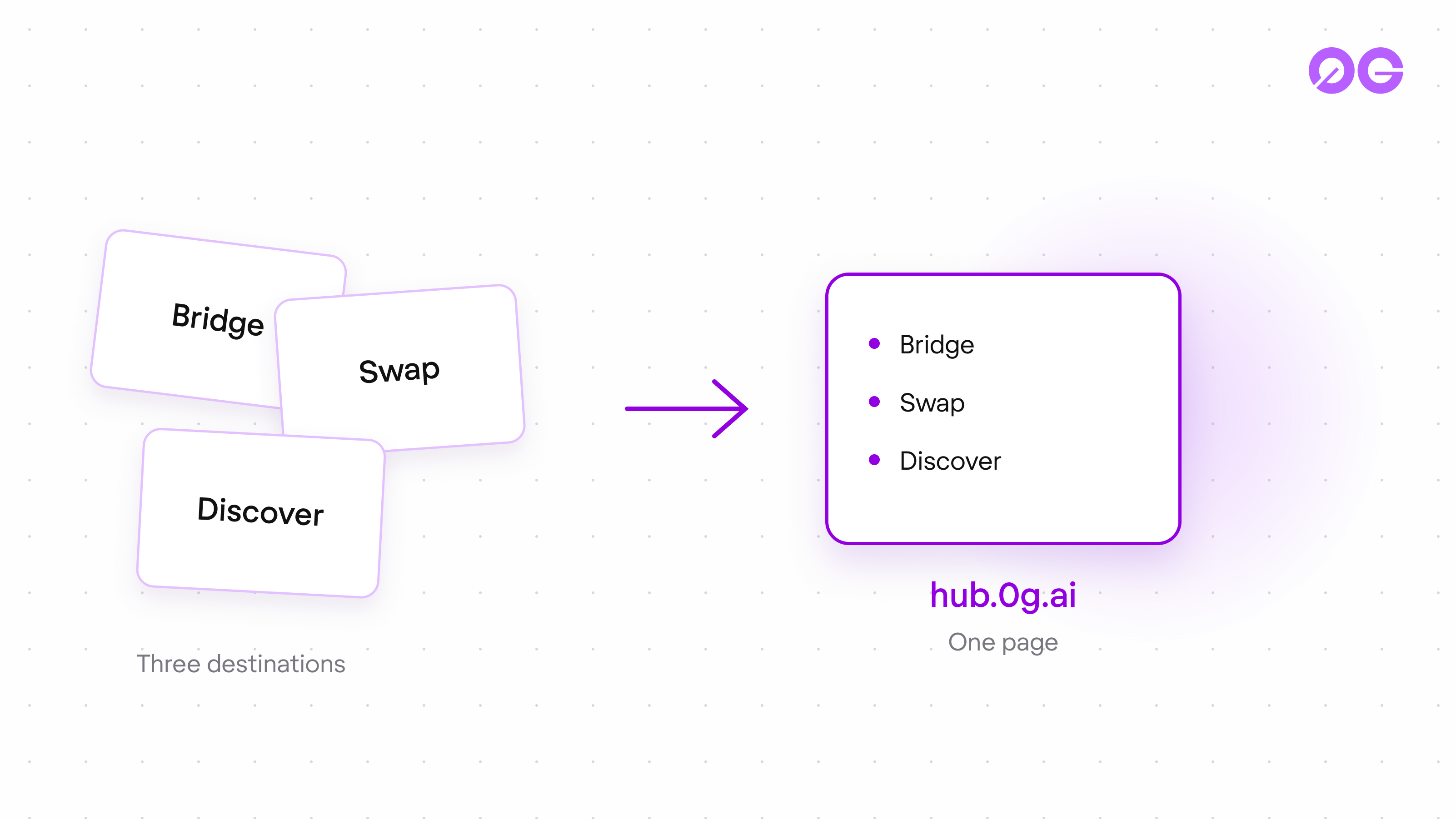
Bridging, swapping and finding apps used to be three websites. Now it is one page, and the route it picks is the one that leaves you holding the most.
Getting onto a new chain has always been the same chore. You find out which bridge covers your route, you check whether the token you land with is the one you actually wanted, and then you go looking for something to do with it. Three problems, three different websites, and no way to tell whether you picked the cheap path or the expensive one.
The 0G Hub is live at hub.0g.ai. It puts those three things on one page.
What the Hub covers today
| Surfaces | Discover, Bridge & Swap, Activity, Portfolio |
| Source chains | Ethereum, Arbitrum, Base, BNB Chain, Solana, Robinhood Chain |
| Swap venues | Bond, Oku, Zia |
| Bridge providers | Chainlink CCIP, LI.FI (Stargate, Glacis), Khalani, plus a Wormhole Portal route for SOL |
| Apps on Discover | 23 listed, 18 live, across agents, DeFi, tools, infrastructure, social, gaming and payments |
| Custody | Non-custodial. No settlement contract of its own |
| Approvals | Exact amount, never unlimited. At most one per swap |
| Not in this release | Native staking, faucet, fiat on-ramp |
Bridge and swap are one surface
You pick where you are coming from and what you want to end up with. In the Hub's own words on the page, every route is quoted across venues and providers, with the cheapest ranked first. What it compares is what you keep: the output measured against everything the route costs you, including the gas you pay to send it.
Swaps on 0G route through Bond, Oku and Zia. The Hub is not an aggregator with its own contract in the middle. It quotes the venues and sends the whole trade to the best price. Bridges go through Chainlink CCIP, LI.FI and Khalani, and a Wormhole Portal route carries SOL itself between Solana and 0G.
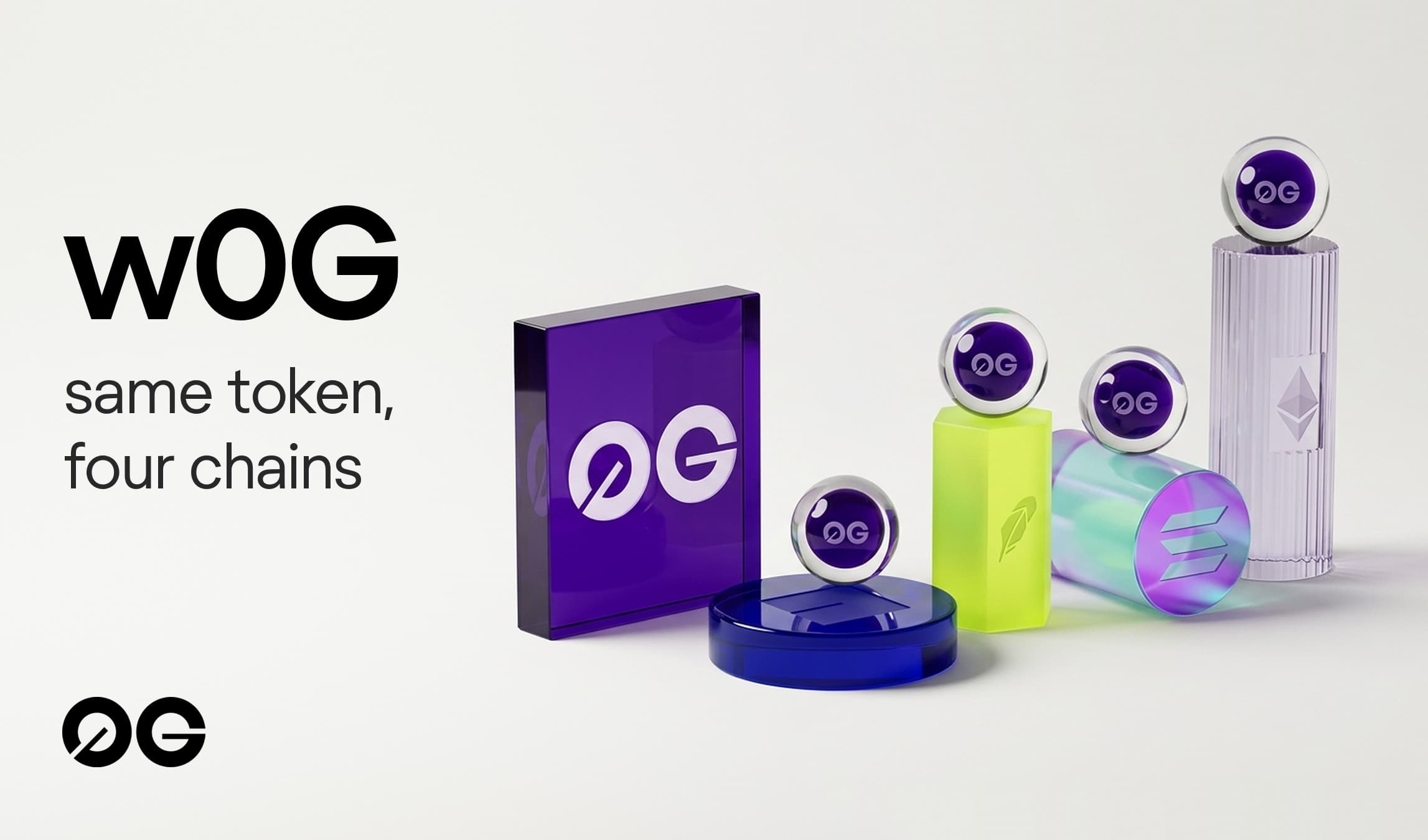
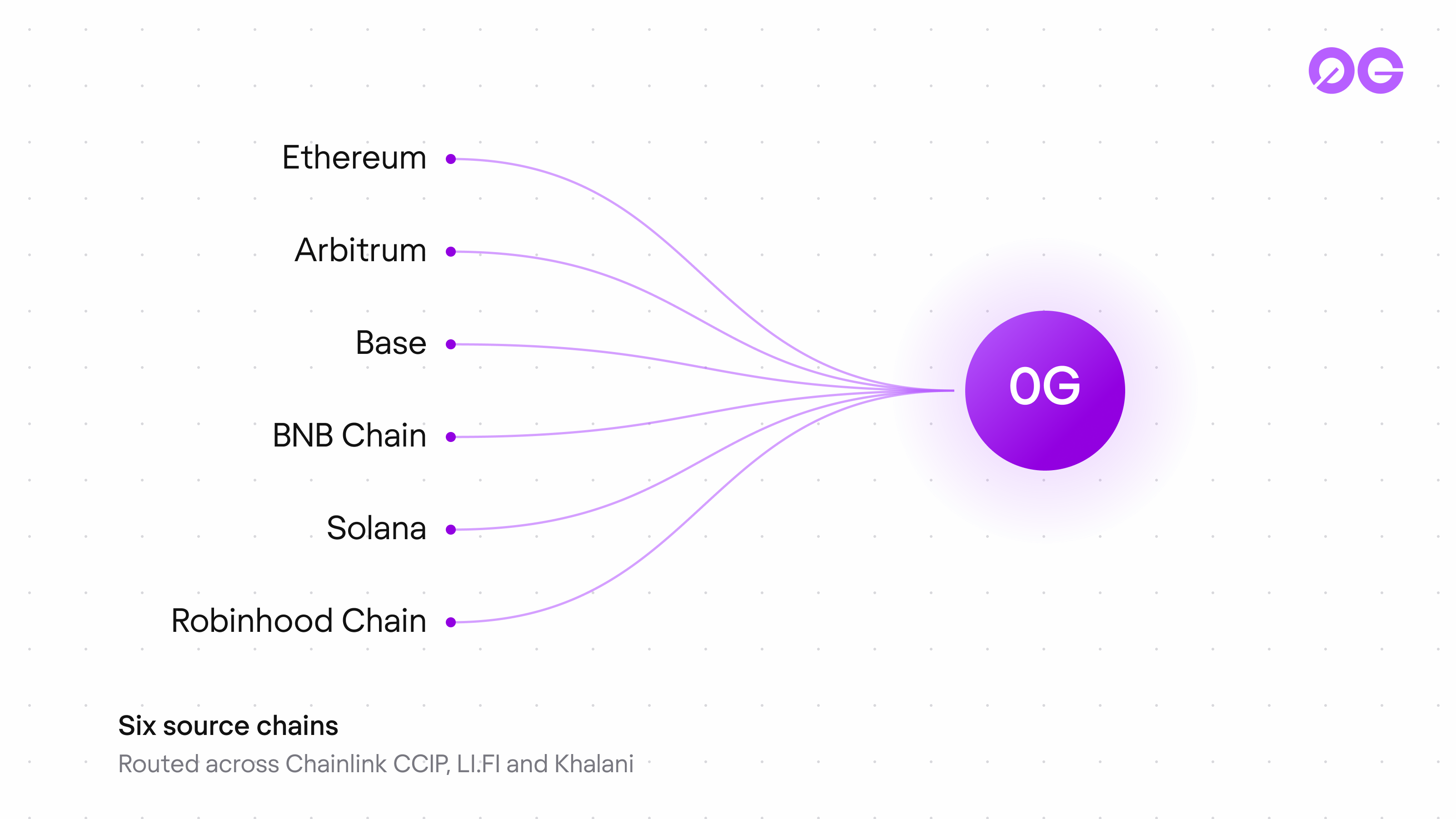
Six chains connect to 0G today: Ethereum, Arbitrum, Base, BNB Chain, Solana and Robinhood Chain.
You do not need to know which of those providers serves your route. You declare the intent and the Hub builds the path. Where no provider covers a pair, the Hub says so instead of guessing, and a quote that would cost you too much is refused rather than quietly routed somewhere worse.
Two steps, shown before you sign
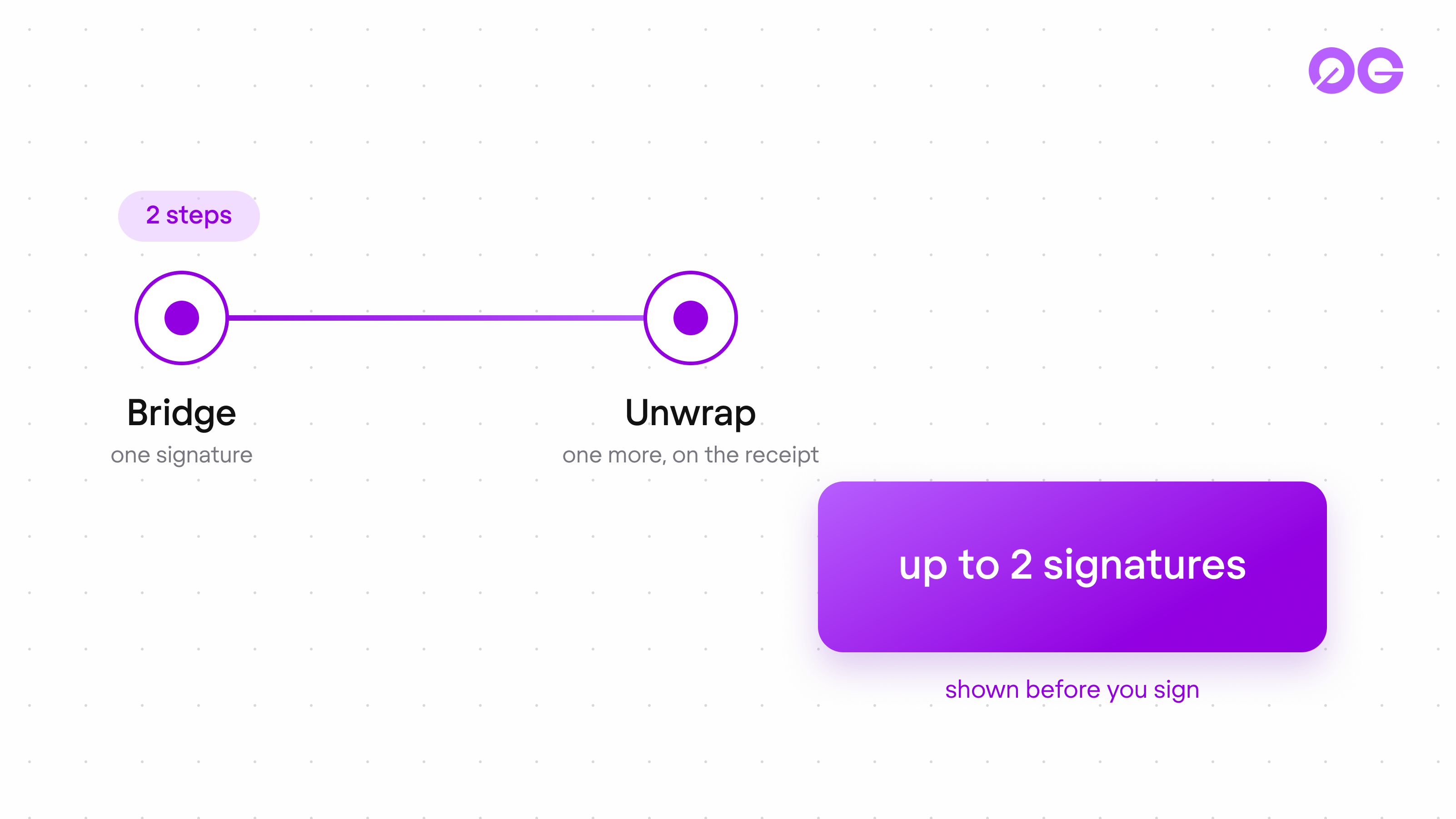
Some routes cannot be done in one transaction. Bridging into native 0G from another chain, for example, delivers w0G first and then unwraps it.
Before you sign anything, the quote tells you it is two steps, what each one costs, how many signatures it will ask for, and roughly how long it takes. The number that matters most there is the signature count, because that is the part you cannot delegate and the part that decides whether you can walk away from your desk. When the first step lands, the receipt offers the second one as a button.
If your wallet is short on 0G for that second signature, the Hub says so by name and tells you the bridge still works. The unwrap waits on the receipt until you have gas. Worth knowing before you start: the bridge delivers the token you asked for, not gas, so if you are arriving on 0G with an empty wallet you will need a little 0G from somewhere else to finish.
Some of those routes take a while, and it is worth saying why. Coming into 0G from a Layer 2 such as Robinhood Chain, the bridge has to wait for that chain to settle on Ethereum before it can safely release anything on the other side. That wait belongs to the source chain, not to 0G and not to the Hub. Going the other way, out of 0G, is a different story: 0G reaches sub-second finality, so the outbound leg is quick. The Hub shows the estimate up front either way, and the receipt records what it actually took.
Where the Hub says no
A router that never refuses anything is not protecting you from anything.
The Hub carries a price impact limit it will not cross. Above it, the quote is blocked rather than served, and no setting moves that ceiling. The limit is stated on screen in the swap settings, next to the two thresholds you can move: the point where a quote turns amber on price impact, and the point where it turns amber on how much of your value the route is taking.
That is the whole posture in one line. You can tune when the Hub warns you. You cannot tune when it refuses.
Discover is the other half
Bridging in is only useful if there is something on the other side.
Discover lists 23 apps, 18 of them live, grouped by what they do rather than by how they were built: agents, DeFi, tools, infrastructure, social, gaming and payments. Each card says in one line what the app is for.
The spotlight today is on Ascend, 0G App, 0G Private Computer, Best.CEO and OpenAdapter. Three more are listed as coming soon: iAI, Comfy, and one the page will only describe as classified until launch.
Your side of it
Two pages keep the record.
Portfolio shows what you hold on 0G and on the chains you bridged from, split into 0G assets and everything else.
Activity shows every swap and bridge you have done through the Hub, step by step, with the transaction to check it against. A bridge that took two steps shows both.
What it does not do
The Hub is non-custodial. It never takes your funds, and it deploys no settlement contract of its own, so every trade runs through the venue's or the bridge's own audited contracts. Approvals are for an exact amount and never unlimited. A swap asks for at most one, and none at all when an allowance you granted earlier already covers it.
Native staking is not in this release. The decision on record is that the Hub should own it eventually, after the launch surfaces settle. Portfolio is already built so that a stake can slot in as another position rather than needing a rebuild.
Where to start
If you already hold assets somewhere else, start at hub.0g.ai and bridge in. If you are new to 0G entirely, the Discover page is the shorter path: find something worth using first, then work out what you need to hold.
The 0G Hub is operated and published by Zero Gravity Labs Inc.
Frequently asked questions
What is 0G?
0G is the trust layer for AI. It combines private compute, encrypted storage, and an AI-native EVM L1 chain in one stack where AI work, from inference to agent actions, is verified and audited.
Where can I get 0G?
get.0g.ai is the interactive guide on how and where to acquire 0G tokens, with options for developers, investors, and ecosystem participants.
Where can I build on 0G?
Start at build.0g.ai for docs, starter kits, and the latest SDK. Visit 0g.ai/partners to browse the projects already shipping on the network.