Three months, five cities, 38 countries, $150K in prizes. How AI x Web3 builders turned the agentic economy into shipped products on 0G.
Over three months this spring, builders across Asia-Pacific did not just pitch ideas on 0G. They shipped. The 0G APAC Hackathon, run with HackQuest from March to May 2026, closed with 293 valid submissions, and 168 of them went live on 0G mainnet. Not a testnet demo. Mainnet.
That is the number that matters in a hackathon built around one question: can you actually run an autonomous AI agent on decentralized infrastructure, end to end? For 293 teams across 38 countries and regions, the answer came back yes.
Here is the recap: the numbers, the five cities, the five tracks, and all 23 winning teams.
By the numbers
A snapshot of the 0G APAC Hackathon (March to May 2026):
- $150,000 total prize pool
- 293 valid submissions
- 168 mainnet deployments (57.3%), plus 97 on testnet
- 38 countries and regions
- 1,145 registered builders
- 5 tracks, 5 offline city events, 8 weeks of online Builder Hours
- 1.06M+ marketing impressions across the campaign
The headline is the mainnet rate. When 57.3% of submissions deploy to mainnet, an event stops being a demo contest and starts being a read on whether the stack is ready for production work. Across the submissions, 0G Chain showed up in 270 projects, 0G Storage in 260, 0G Compute in 219, Agent ID in 131, and 0G Data Availability in 50.
Five cities, one builder room
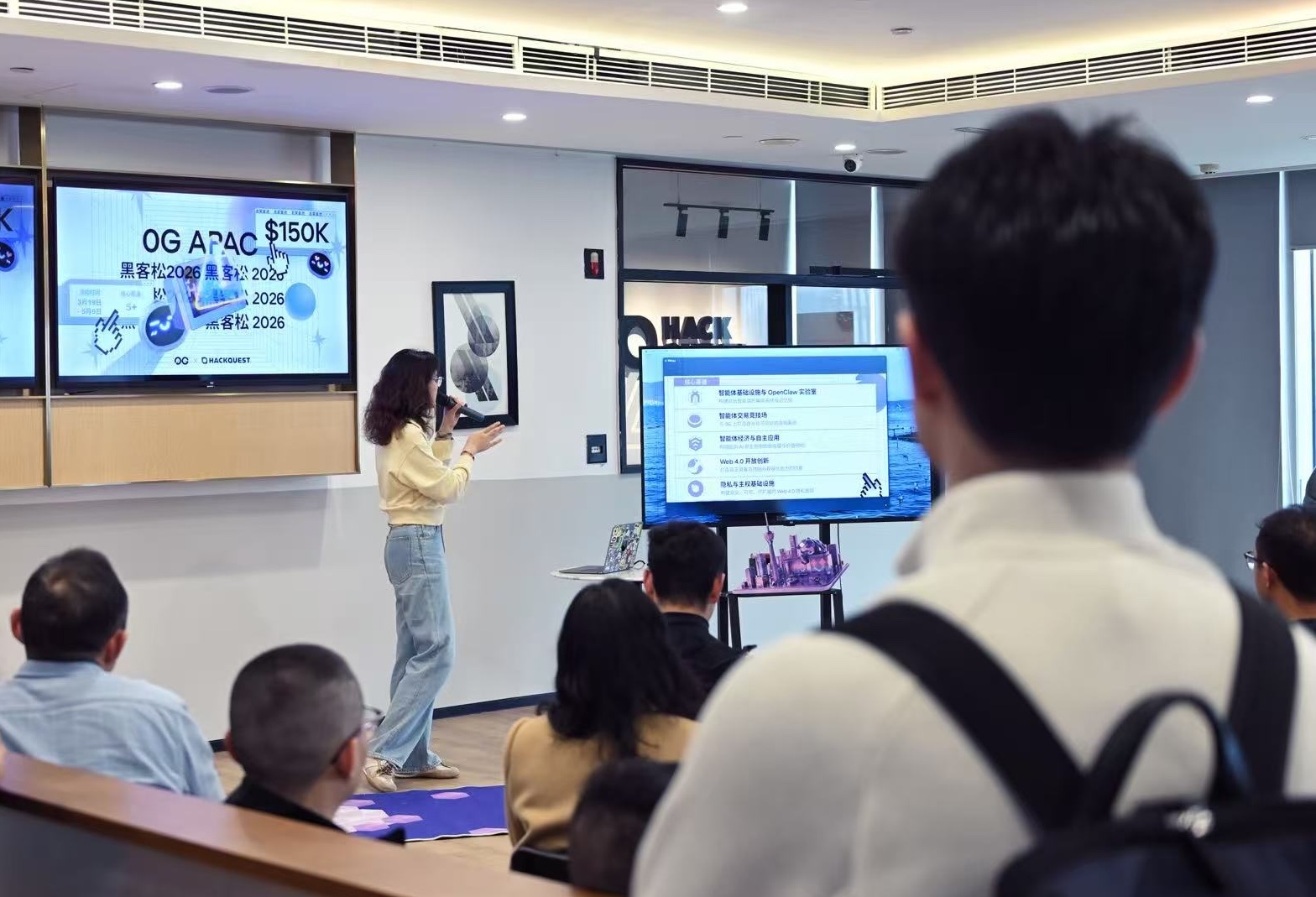
We built the hackathon around real rooms, not just a submission portal. Five offline "Builders Open AI Day" events ran across Asia-Pacific, each one a working session on the full 0G stack rather than a booth.
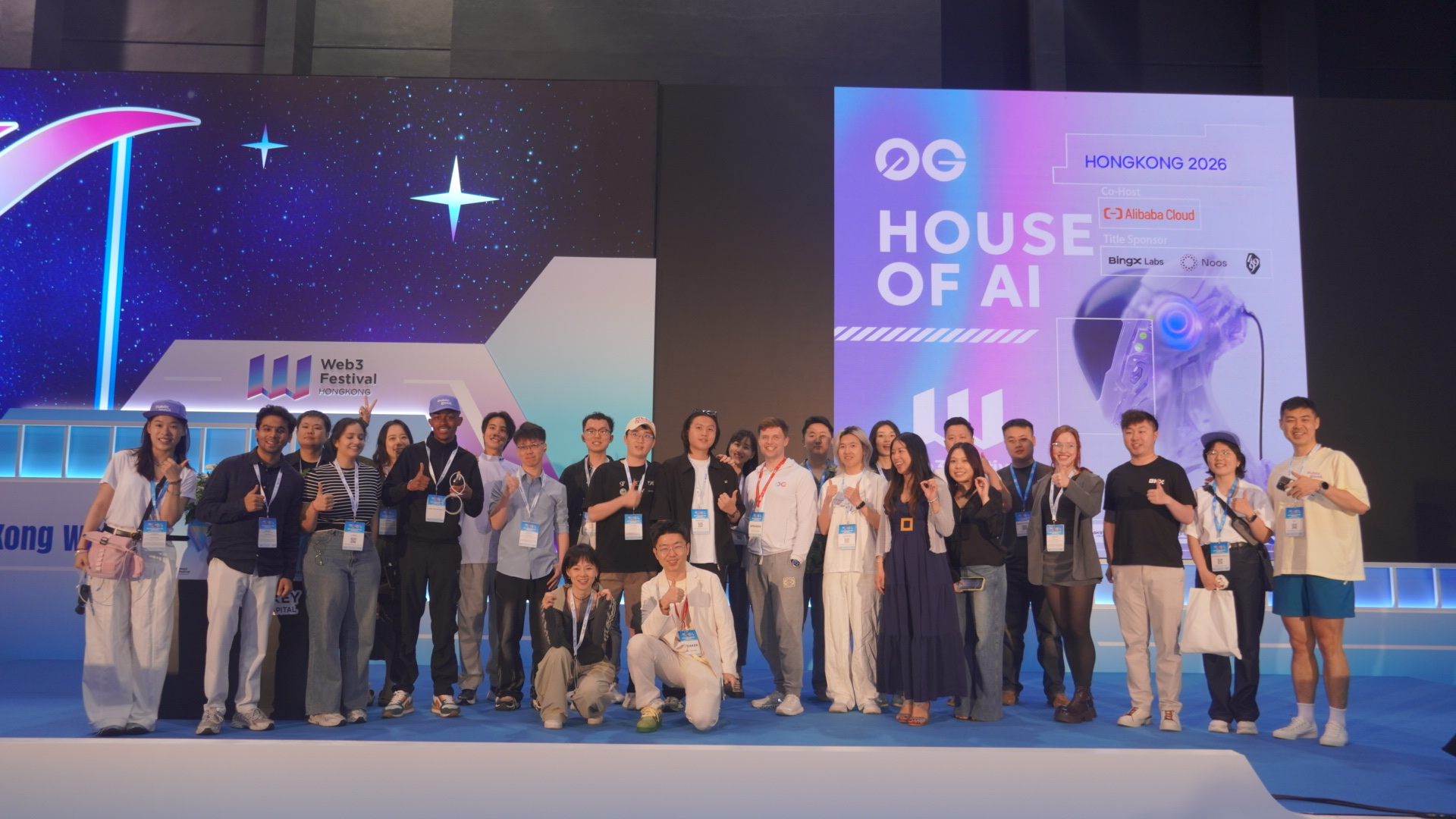
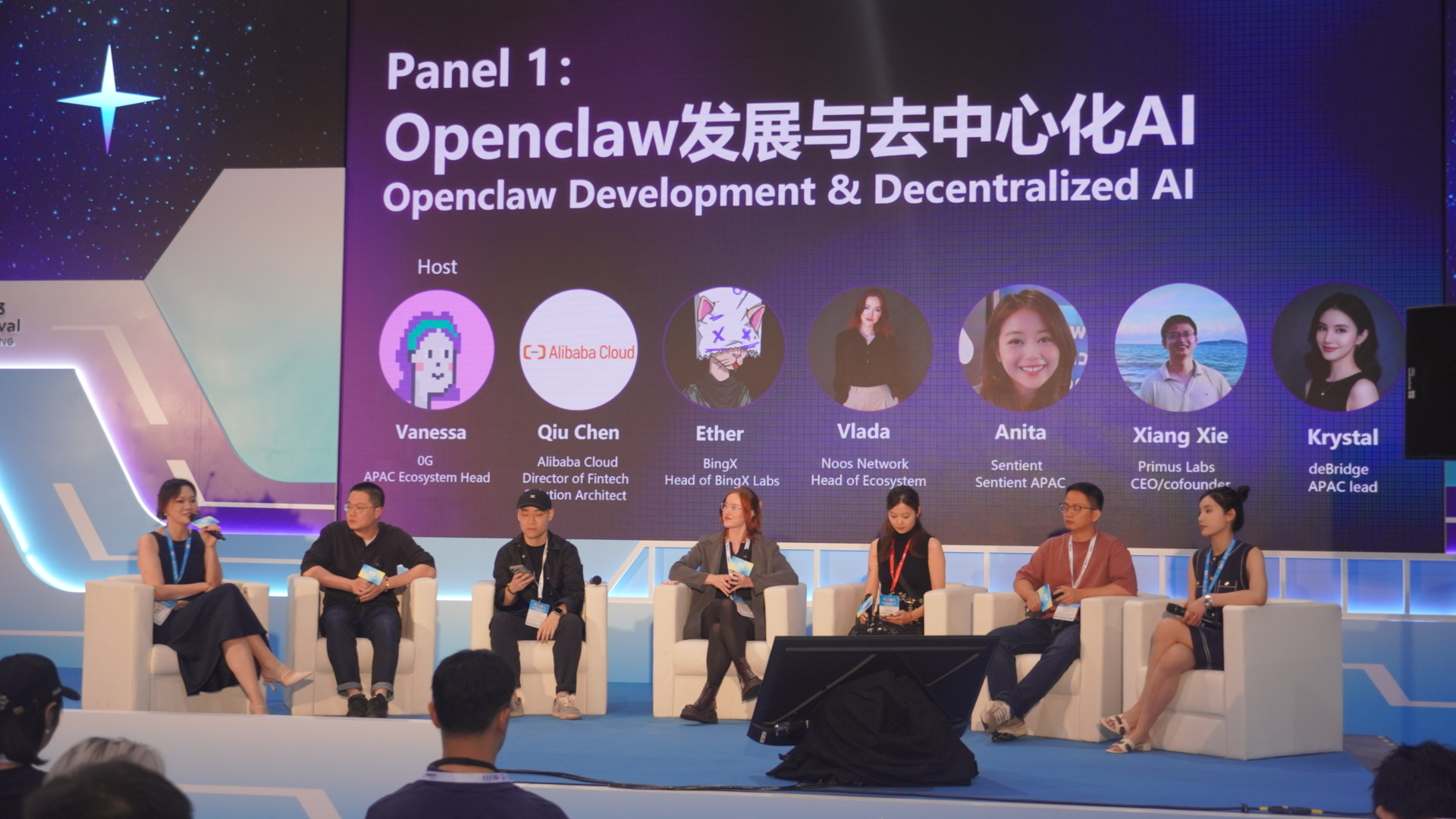
The flagship was House of AI at the Hong Kong Web3 Festival on April 22, co-hosted with Alibaba Cloud and sponsored by BingX Labs, Noos, and 499. The day ran a CEO fireside chat, four keynotes, two panels, and live demos from ten teams.

The rest of the roadshow:
- Chengdu (March 28-29): the opening stop, a deep dive into 0G Storage, Compute, Chain, and DA.
- Bangalore (April 12): an AI workshop with Gathin from 0G DevRel and an OpenClaw agent workflow demo for the India community.
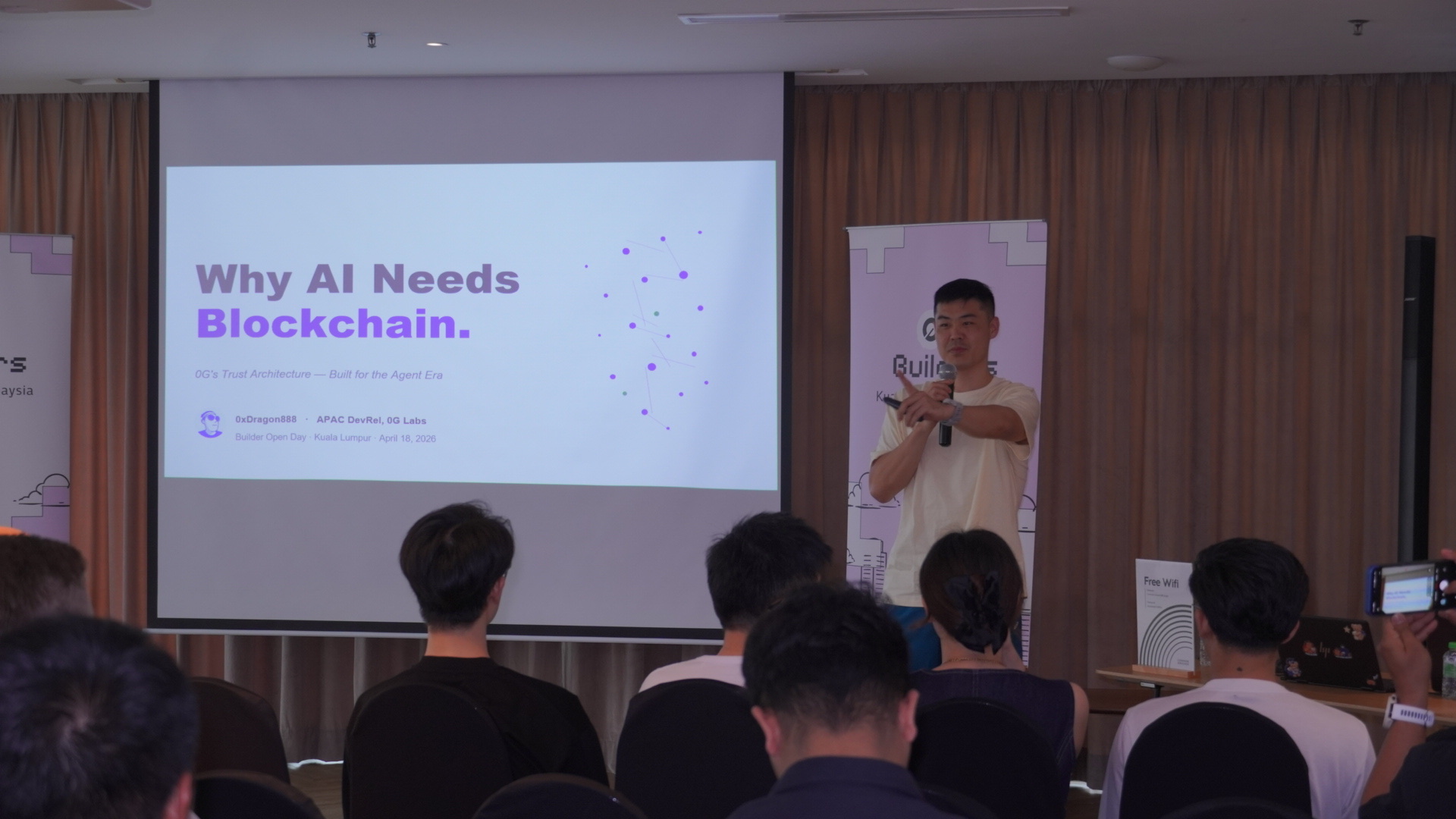
- Kuala Lumpur (April 18): a 0G keynote, an OpenClaw multi-agent demo, and a dedicated Alibaba Cloud session.
- Hong Kong (April 22): House of AI, the flagship.
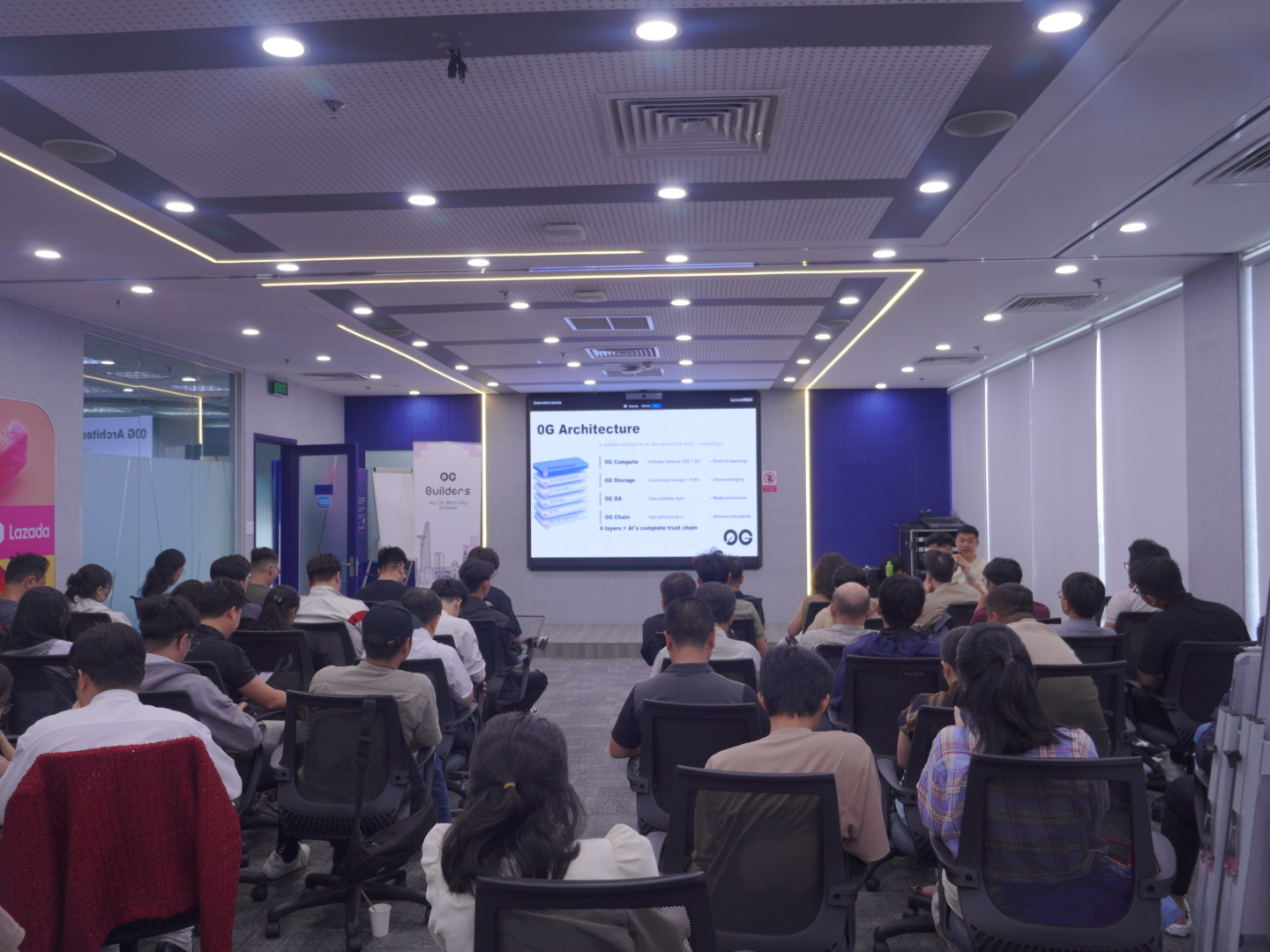
- Ho Chi Minh City (May 5): 120+ registrations and a live walkthrough of Proof of Reasoning, combining TEE and ZK.
Five tracks, one stack
Submissions ran across five tracks:
- Agentic Infrastructure & OpenClaw Lab
- Agentic Trading Arena - Verifiable Finance
- Agentic Economy & Autonomous Applications
- Web 4.0 Open Innovation - Wildcard
- Privacy and Sovereign Infrastructure
By category, the split tells you where builders went: AI Agents & Infrastructure (172) led, ahead of DeFi (46), Data & Storage (40), Developer Tools (20), and Privacy & Security (13). Agents, and the infrastructure to run them.
The pattern across the strongest projects was the same one we keep hearing from builders: agent identity, agent memory, and verifiable compute are the moat. Not chatbot wrappers. Almost every standout team leaned on portable identity through Agent ID and sealed inference inside a TEE, then anchored the proof onchain.
The winners
Twenty-three teams took home a share of the $150,000 pool. Here they are.
The podium
🥇 Champion: Ghast AI (@Ghast_AI)
A browser-native AI assistant, and the first fully onchain "OpenClaw." User-owned memory, a portable Agentic ID, and inference that runs across the full 0G stack instead of a central server. We profiled Ghast AI in a separate deep-dive: at its April launch, the pre-alpha had already passed 1,200 registered users and 56M+ inference tokens consumed.
🥈 Runner-up: NeoSoul (@NeoSoulAI)
A trust layer for the agent economy. Verifiable permissions, accountability, and recovery for AI agents, with a self-evolving onchain router live on 0G mainnet.
🥉 Third place: Anima (@anima_0g)
A native CLI framework for fully onchain agents, where identity, memory, reasoning, wallet, and economic activity all live on 0G.
Excellence Awards (10)
- AIsphere (@AIsphere0G): A shared, onchain memory layer where every agent is born with an identity and grows through what it learns. Collective intelligence for AI agents.
- Hash PayLink (@Hash_PayLink): Payment-proof infrastructure for the agent economy. Multi-chain USDC payments archived to 0G so an agent can verify a payment before it unlocks paid access.
- Beam (@railbeam_ai): A payment rail and finance workspace where humans and agents hire AI agents to run money operations, with agents deployed through Agentic ID (ERC-7857) and onchain ERC-8004 agent registries.
- Stealth Pay (@stealth_pay): A private payments stack on 0G Chain. Shield, send, unshield in three calls, with ZK proofs, no relayer, and no trusted setup.
- Herald Protocol (@herald_protocol): An agent-to-agent payment layer on 0G Chain that lets AI agents pay and get paid, and transact with other agents and APIs, with no human in the loop.
- Aegis Vault (@aegisvaults): A verifiable AI-managed trading vault where users set strict onchain risk mandates and operators compete by committing their models and strategies onchain.
- YieldBoostAi (@YieldBoostAi): A developer store for Web3 AI security and yield modules. Anti-sybil and proof-backed protections, sold through one marketplace on 0G.
- MemoriaDA (@MemoriaDA_): A decentralized memory protocol for AI agents. Vector embeddings on 0G Storage, Merkle roots on 0G Chain, and sealed TEE inference through 0G Compute. Live on mainnet.
- Coal (@coal_payments): A commerce platform for the agent economy, with checkout, paywalls, subscriptions, and splits, where agents pay via x402 and 0G powers verifiable receipts.
- Orcus (@Darkreyyy): An MEV-resistant dark-pool trading agent that keeps trading intent encrypted until settlement is final, with sealed TEE inference on 0G Compute.
Community Awards (10)
- BlindMarket (@blindmarkt): An agent-to-agent execution marketplace that is cryptographically unable to read what one agent is asking another to do.
- foundry0g (@foundry0g): A marketplace where creators fine-tune AI models, mint them as ERC-7857 assets, and earn from onchain licensing.
- VamVault (@VAMVault_): A verifiable AI memory vault for agents.
- Sentri (@sentri_fi): A TEE-signed AI treasury vault. Private strategy, real execution, and an onchain risk policy the agent cannot bypass.
- Lineage (@Lineage_0G): A royalty layer for AI. Datasets, models, and skills become onchain Agentic IDs, every inference produces a TEE-signed receipt on 0G DA, and contributors are paid through Merkle settlement.
- Ivaronix (@Ivaronix): Private AI work with public proof. Specialist reviews run inside TEE-attested 0G Compute and emit a signed, chain-anchored receipt anyone can re-verify in seconds.
- Agentra (@Agentra69): A platform where builders deploy AI agents that earn through subscriptions and agent-to-agent commerce. You built the agent, they made it an asset.
- 0xgents (@0xgents): Decentralized identity and services for AI agents.
- SynapseMesh (@synapsemesh): Trustless coordination for multi-agent systems. Onchain task DAGs with TEE work verification and atomic agent settlement on 0G.
- Philotheephilix (@Philotheephilix): Sharded LLM inference across consumer GPUs.
What the builds proved
The through-line across the winners is hard to miss. Agent identity, owned by the user and portable through Agentic ID (ERC-7857). Agent memory, stored and verifiable rather than locked in a vendor's database. Inference that runs inside a TEE and leaves a receipt anyone can check. Payments that move agent-to-agent without a human in the loop.
These are the missing pieces of an agent economy, and 168 teams put them on mainnet during a single hackathon. The agentic economy on 0G is not a roadmap slide. It is running today, across a stack of chain, storage, compute, and data availability built for exactly this.
If you are building in that direction, the door is open. Start at build.0g.ai.
Frequently asked questions
Who won the 0G APAC Hackathon?
Ghast AI took the top prize, with NeoSoul as runner-up and Anima in third. Ten teams earned Excellence Awards and ten earned Community Awards, for 23 winners total sharing a $150,000 prize pool.
What was the 0G APAC Hackathon?
A three-month hackathon (March to May 2026) run by 0G with HackQuest for AI x Web3 builders across Asia-Pacific. It drew 293 valid submissions from 38 countries and regions, 168 of which deployed to 0G mainnet, across five tracks and five offline city events including House of AI at the Hong Kong Web3 Festival.
What is 0G?
0G is the trust layer for AI. It combines private compute, encrypted storage, and an AI-native EVM L1 chain in one stack where AI work, from inference to agent actions, is verified and audited.
Where can I get 0G?
get.0g.ai is the interactive guide on how and where to acquire 0G tokens, with paths for developers, investors, and ecosystem participants.
Where can I build on 0G?
Start at build.0g.ai for docs, SDKs, and starter kits. Visit 0g.ai/partners to browse the 300+ projects already shipping on the network.
Stay connected
Thank you to every builder, mentor, and judge who made the 0G APAC Hackathon happen, and to HackQuest for co-hosting the program and Alibaba Cloud for co-hosting House of AI.
Follow along: X (@0G_labs) | Website | Blog | Build on 0G
Sources:
- 0G APAC Hackathon winners (@0g_CN announce thread)
- Ghast AI: OpenClaw in Your Browser, Powered by 0G
- 0G documentation
- Build on 0G