TL;DR: Flashback is a voice-based memory preservation app running entirely on 0G's decentralized stack. Since launching in January 2026, it has onboarded 802 wallets, stored 3,300+ files on-chain, and cut infrastructure costs by ~70% compared to its previous setup on IO.NET.
Decentralized AI can't scale without infrastructure, and infrastructure is only as strong as the builders behind it. Which is why we launched the 0G Builder Spotlight, a series showcasing projects building at the intersection of AI and blockchain on 0G.
This edition features Flashback, a privacy-first AI platform that lets users capture, preserve, and relive voice-based memories with true ownership. The team migrated their entire stack from IO.NET to 0G in January 2026, and the early results speak for themselves (more on those numbers below).
Flashback wants to make sure your memories stay yours, permanently. That's where 0G comes in.
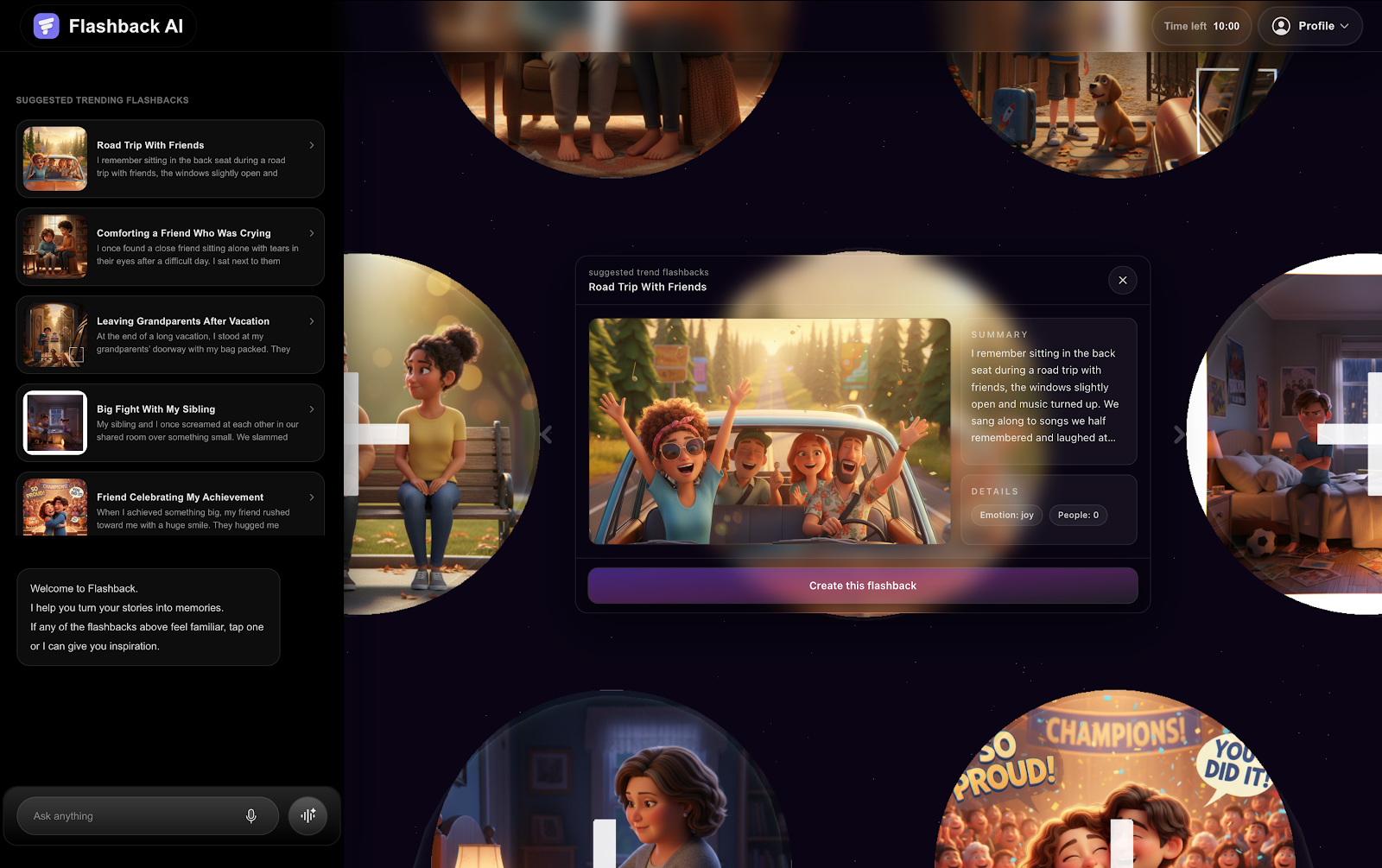
What Is Flashback? Voice AI for Memory Preservation
Flashback is building a privacy-first platform for AI-powered memory capture. The app combines voice-based recording, AI processing, and decentralized storage so users can preserve memories they actually own.
Unlike traditional memory apps that store data on centralized servers, Flashback gives users full control over their memories. Every user creates a 0G wallet by default, and all their data (voice recordings, AI-generated datasets, and Memory Orbs) is stored directly on 0G Storage, fully owned by the user.
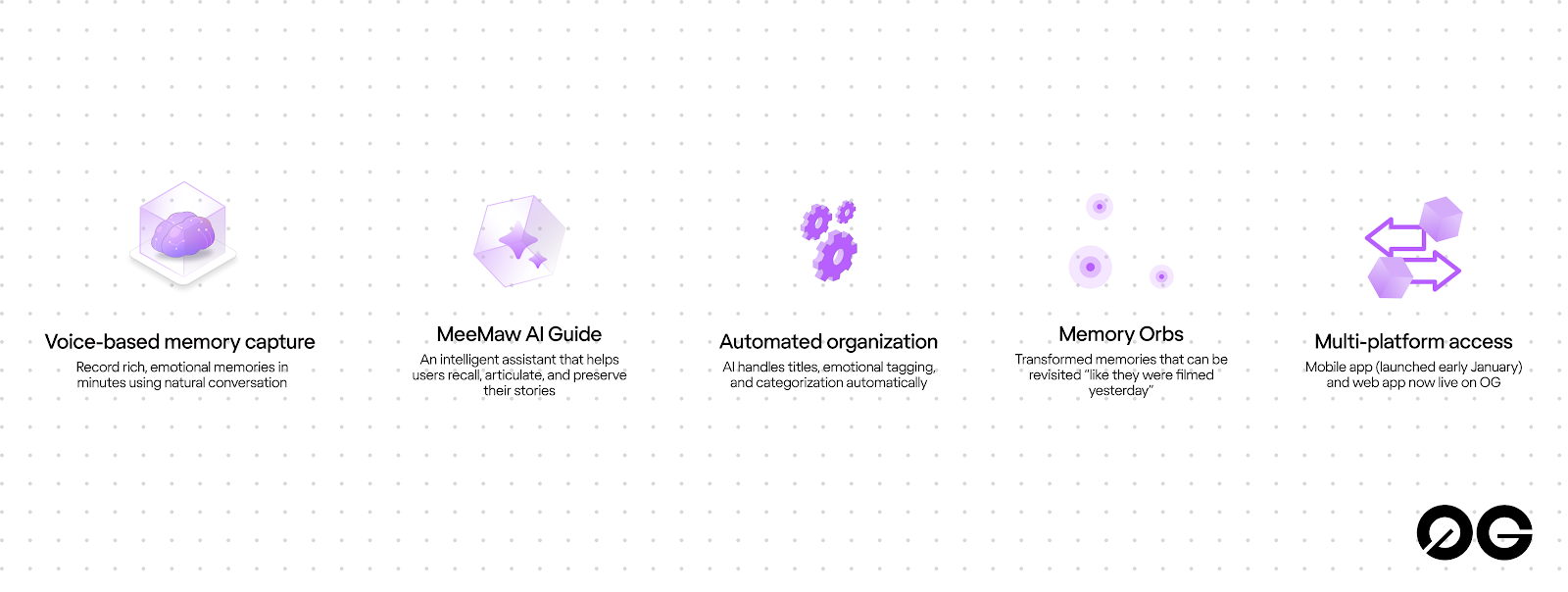
Here's how it works: you open the app, start talking, and MeeMaw (Flashback's AI guide) walks you through recalling a memory step by step. No typing needed. Just a guided conversation. When you're done, the AI organizes everything automatically and turns it into a "Memory Orb" you can revisit anytime. The whole process takes a few minutes on mobile or web.
"0G is a single destination for Storage and Compute to create a pure de-AI experience, which is not possible elsewhere." - Vinay Kumar, CEO & Co-Founder, Flashback Labs
Why Flashback Chose 0G for Decentralized Storage and Compute
Before integrating with 0G, Flashback was using IO.NET for computing. While functional, this setup couldn't deliver on the team's core vision: a fully decentralized, user-owned AI experience. Storage and compute were separate, making true data ownership difficult to achieve.
Memory preservation presents unique infrastructure challenges. Personal voice recordings and AI-processed memories are sensitive. Think family stories, private reflections, moments people don't usually share publicly. Traditional cloud storage means trusting a third party with this intimate data, with no guarantees about privacy, access, or permanence.
Flashback needed infrastructure that could deliver:
- True user ownership of data (not just promises)
- Unified storage and compute in a single stack
- Long-term storage guarantees without centralized dependencies
- Cost efficiency without sacrificing decentralization
0G's modular architecture addressed each of these requirements. As the team puts it: "Having storage and compute stacked together helped us have a single stack, saving resources and time."
How Is Flashback Integrating 0G?
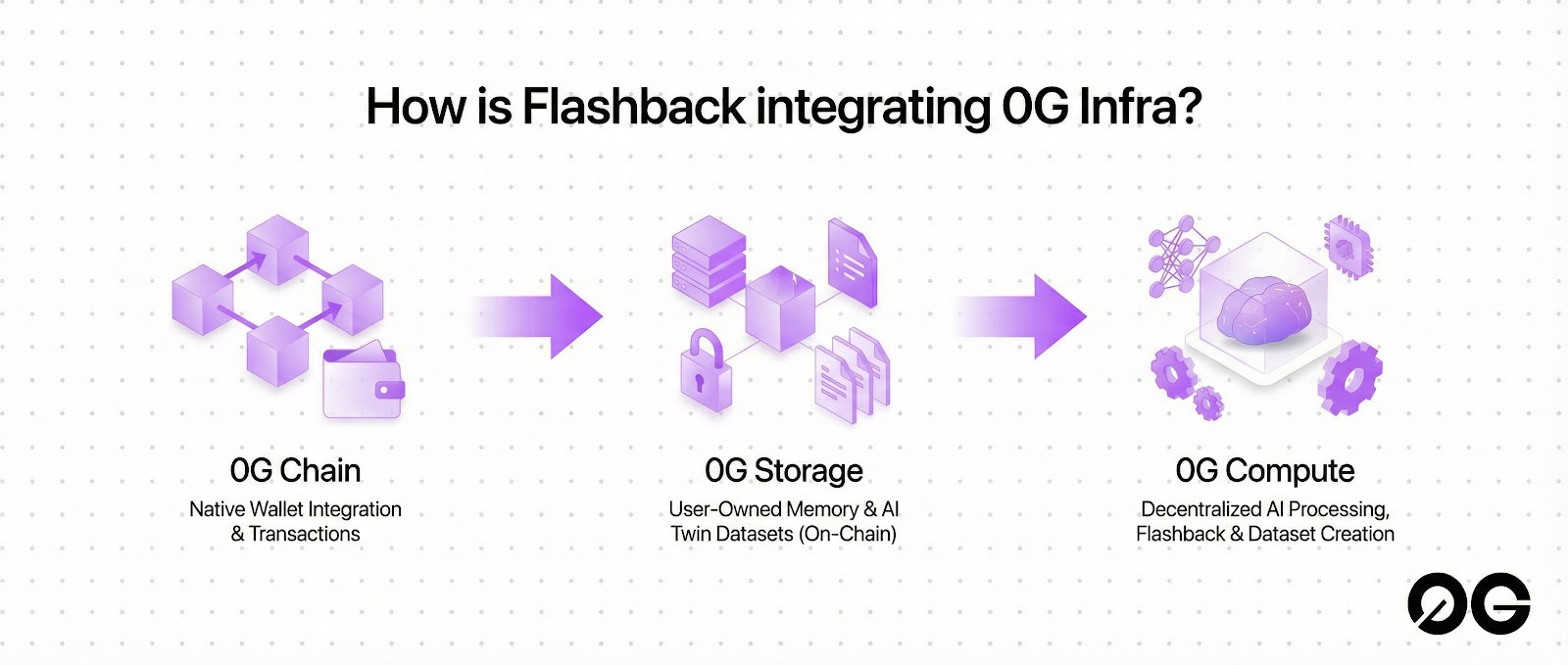
Flashback is built on three core 0G layers: Chain, Storage, and Compute. The team plans to expand into Data Availability and ERC-7857 intelligent NFTs.
0G Chain: Native Wallet Integration
Every Flashback user creates a 0G wallet by default. Users pay for storage and compute operations directly in 0G tokens. Since launch, Flashback has processed over 9,900 on-chain transactions through 0G Chain.
0G Storage: User-Owned Memory Infrastructure
All user data and AI Twin datasets are stored on 0G Storage, so users own their data outright. Key storage metrics:
- 3,300+ files stored on-chain
- 519 MB of memory data preserved
- 50%+ cost reduction compared to centralized alternatives
- Partnership with Beacon for on-chain encryption
0G Compute: Decentralized AI Processing
Flashback uses 0G Compute to analyze user input and create flashbacks and datasets from user sessions. This includes MeeMaw's conversational guidance and emotional tagging, all running on decentralized infrastructure. The team reports 90% cost savings on inference compared to their previous setup.
Why This Architecture Matters
With decentralized storage and verifiable compute, AI processes your personal data without any single company having access to it. Or as Flashback puts it: "AI that's actually entirely yours."
"0G Hot Storage will help us eliminate AWS for storage and compute for real-time AI experiences." - Vinay Kumar, CEO & Co-Founder, Flashback Labs
Impact Since Building on 0G
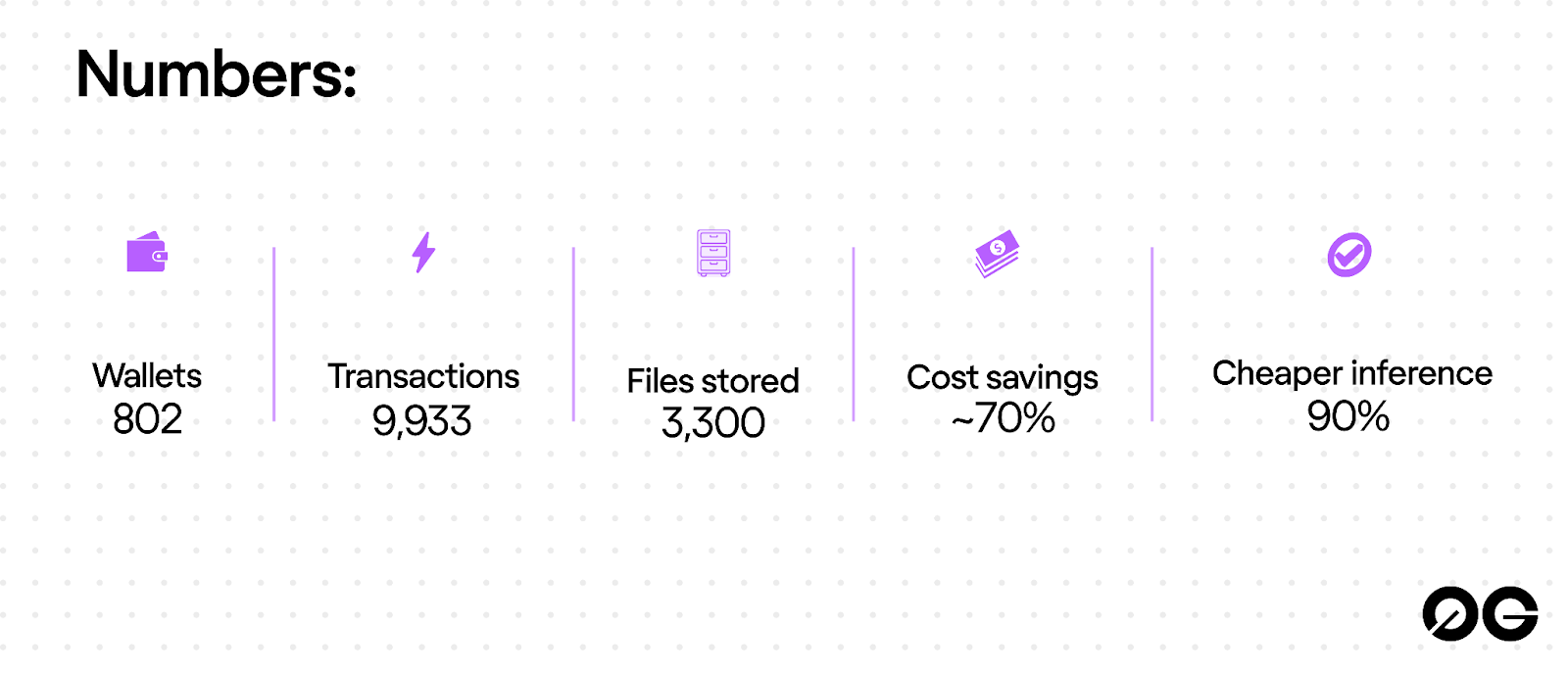
Since migrating to 0G and launching in January 2026, Flashback has put up solid numbers in its first month (source: flashbacklabs.com, January 2026):
- 802 wallets created on 0G Chain
- 498 monthly active users
- 9,933 on-chain transactions processed
- 3,300+ files stored on 0G Storage (519 MB)
- ~70% overall cost savings versus previous infrastructure
- 90% cheaper inference costs via 0G Compute
- 50%+ cheaper storage versus centralized alternatives
- First fully decentralized launch, something that "wasn't possible before" on their previous stack
The team also integrated Beacon, a 0G ecosystem partner, for on-chain encryption. Users control who can access their memory data, and when.
What's Next for Flashback
With the 0G integration now live across mobile and web, Flashback is working on what comes next:
- AI Twins with iNFTs - ERC-7857 intelligent NFTs will let users create AI Twins that evolve with each new memory
- 0G Hot Storage - Real-time AI experiences that can fully replace AWS for both storage and compute
- Expanded Compute Usage - More sophisticated memory processing through deeper 0G Compute integration
- Data Availability Integration - Support for higher-frequency operations as the platform scales
The team has also identified areas where 0G can help them grow further: native on-chain encryption with access control, and a gas payer for sponsored transactions to enable a gasless user experience.
This article is for informational purposes only and does not constitute financial advice.
More from the Builder Spotlight Series
Learn more about Flashback
Try Flashback
Explore the 0G partner ecosystem
Read more Builder Spotlights
Frequently Asked Questions
What is Flashback?
Flashback is a privacy-first web3 memory app for voice-based memory preservation. Users record memories through guided conversation with an AI assistant called MeeMaw, and all data is stored on 0G's decentralized storage - fully owned by the user.
How does Flashback use 0G?
Flashback uses three 0G layers: Chain (wallet creation + transactions), Storage (on-chain memory files), and Compute (AI inference for memory processing). This unified stack replaced their previous setup on IO.NET and centralized cloud services.
Is memory data on Flashback private?
Yes. All files are stored on 0G Storage with on-chain encryption provided through Beacon, a 0G ecosystem partner. Users control access to their own data - no centralized server has custody of their memories.
How much does Flashback save by using 0G?
Flashback reports ~70% overall infrastructure cost savings, 90% cheaper AI inference costs, and 50%+ cheaper storage compared to centralized alternatives.